A photograph can hold a whole afternoon: sun on a kitchen table, a child’s first steps, or friends squeezed into a small frame. The frame around it matters, too. It affects how the picture looks on a wall and how well it stands up to everyday handling. Why choose wooden photo frames over plastic ones? For many people, the answer lies in their warmth, finish, and lasting appeal.
Wood has visible grain and subtle variations, so each frame can feel a little different. A walnut finish may deepen the tones in a family portrait, while pale oak can suit a bright, simple room. Wooden frames are also available in many shapes and finishes, making it easier to match a photograph without drawing attention away from it. They often feel sturdier in the hand than lightweight plastic frames. But wood is not automatically the better choice. It can cost more, may be heavier, and needs care around moisture and direct sunlight. Plastic can be practical for busy spaces, tight budgets, or frames that need frequent moving.
The right choice depends on the photograph, the room, and how you plan to use the frame. Small details matter. In this guide, we’ll look at appearance, durability, maintenance, cost, and environmental considerations. We’ll also note where wood falls short. A thoughtful choice is better than assuming one material suits every home.
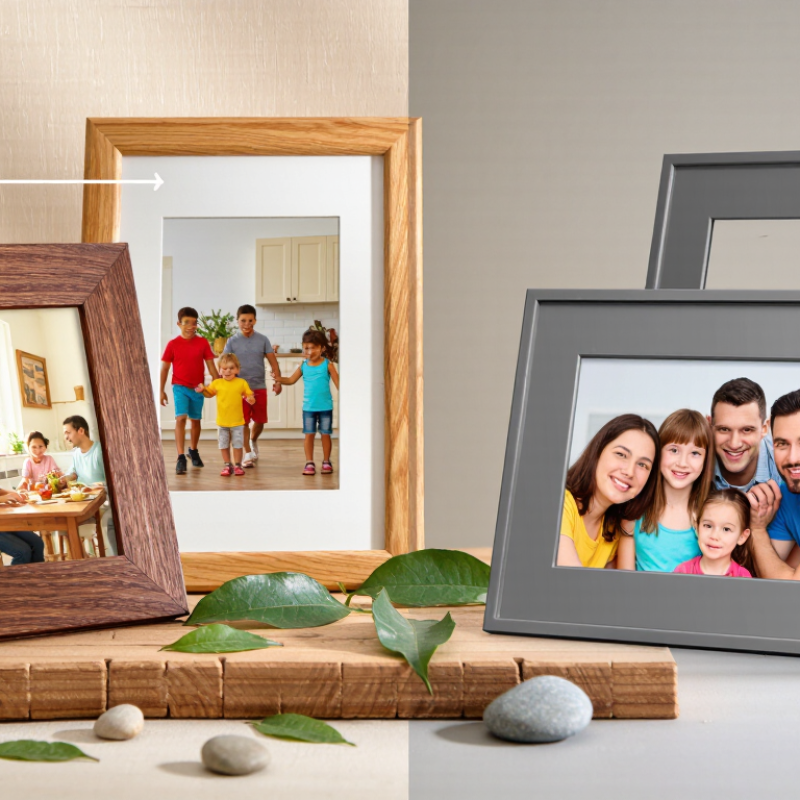
A wooden photo frame shows natural grain, small knots, and subtle differences in color. These details make each frame feel slightly individual. Wood also has a solid, substantial feel in the hand. Plastic frames are usually lighter and often have smooth, uniform surfaces. They can be practical for shelves, travel, or rooms where frames get moved often. That matters.
The materials respond differently to everyday conditions. Wood may shift slightly with changes in humidity, so a snug photo opening can become tighter or looser over time. Plastic is less affected by moisture, but some lightweight frames may bend if handled roughly. Neither material is automatically better. A wood finish can scratch, while plastic can look less textured up close. Consider the room, the frame’s weight, and how often you plan to handle it.
Tips: Check that the backing closes securely and the photo sits flat. For a wooden frame, inspect the corners and finish in natural light. For plastic, gently check whether the frame flexes around the glass or clear panel. Keep either type away from prolonged direct sunlight to help protect the photograph.
| Comparison Dimension | Wooden Photo Frames | Plastic Photo Frames |
|---|---|---|
| Appearance | Natural grain and varied finishes give each frame a warm, traditional look. Grain and color vary by wood species and finish. | Can be molded in many colors and shapes, including finishes that imitate wood, though the surface is generally more uniform. |
| Weight | Often heavier than a similarly sized plastic frame, but weight varies with wood type, frame dimensions, and construction. | Usually lightweight, making it convenient for portable displays and some wall-hanging applications. |
| Durability and repair | Solid wood can often be sanded, refinished, or repaired, depending on the frame’s construction and condition. It can still dent, split, or warp. | Resists some everyday scuffs and does not rust, but certain plastics can crack or become brittle. Repairs may be difficult to disguise. |
| Moisture and sunlight | Unsealed or poorly finished wood can absorb moisture and change shape. Keep it away from damp areas and prolonged direct sunlight. | Does not absorb moisture like wood, but heat and prolonged UV exposure can cause some plastics to fade, discolor, or deform. |
| Care | Dust with a soft, dry cloth. Use cleaning products cautiously because some finishes can be damaged by moisture or solvents. | Usually easy to wipe clean with a soft cloth; avoid abrasive cleaners that may scratch the surface. |
| Price and availability | Prices vary widely by wood species, finish, craftsmanship, and size. Simple wooden frames can be affordable, while specialty frames may cost more. | Often available at lower prices, especially in basic designs, though cost varies with size, finish, and construction. |
| Environmental considerations | A durable frame made from responsibly sourced wood may be used for many years. Environmental impact depends on sourcing, processing, finish, and product lifespan. | Some frames use recycled plastic, but recycling options depend on the plastic type and local facilities. Product lifespan and disposal also matter. |
| Best suited to | Interiors where natural texture, a classic appearance, or the possibility of refinishing is a priority. | Situations where low weight, easy cleaning, color variety, or a lower-cost basic option is important. |
Note: Actual performance and environmental impact vary by material, finish, construction, use, and disposal options.
Wood shows natural grain, knots, and subtle color changes. Plastic usually looks more uniform and feels lighter.
Plastic often resists everyday moisture better than untreated wood. Still, keep frames away from damp windowsills.
Inspect the corners, backing, and joints. A sturdy-looking front can hide weak construction.
Yes. They can be made for unusual print sizes, paired with mats, or finished with engraved lettering.
A mat creates space around a portrait. It can also make a small print feel more substantial.
They often cost more upfront, but compare hardware and replacement glazing too. A low price can be tempting.
Plastic is generally easier to clean with a soft cloth. Scuffs may show under direct light.
No. Sourcing, coatings, and shipping all matter. Plastic waste figures do not describe photo frames specifically.
Measure the photo and the wall space. Check the frame’s dimensions and ask about sturdy joints and replaceable backing.
Why choose wooden photo frames over plastic ones? The answer comes down to the character, longevity, and versatility of wood. Wooden frames often have a warm, natural appearance and a solid feel, while plastic frames are typically lightweight and practical. The materials also age differently: wood can retain its appeal for years when cared for, whereas plastic may be more prone to scratches or fading. Wooden frames offer a range of finishes, shapes, and customization options, making it easier to complement a photograph or interior style.
Cost and environmental impact are also worth considering. Plastic frames may be a more affordable choice, while wooden frames can be a longer-lasting investment, especially when made from responsibly sourced materials. The best option depends on the photo and the space: a wooden frame can add warmth to a family portrait or living room, while a simple plastic frame may suit casual displays or lightweight arrangements. Consider your budget, décor, and desired durability to choose the frame that fits best.

 TayLord Furniture